Ramayana · Day 11 · Week 2
Sita and the Sapling
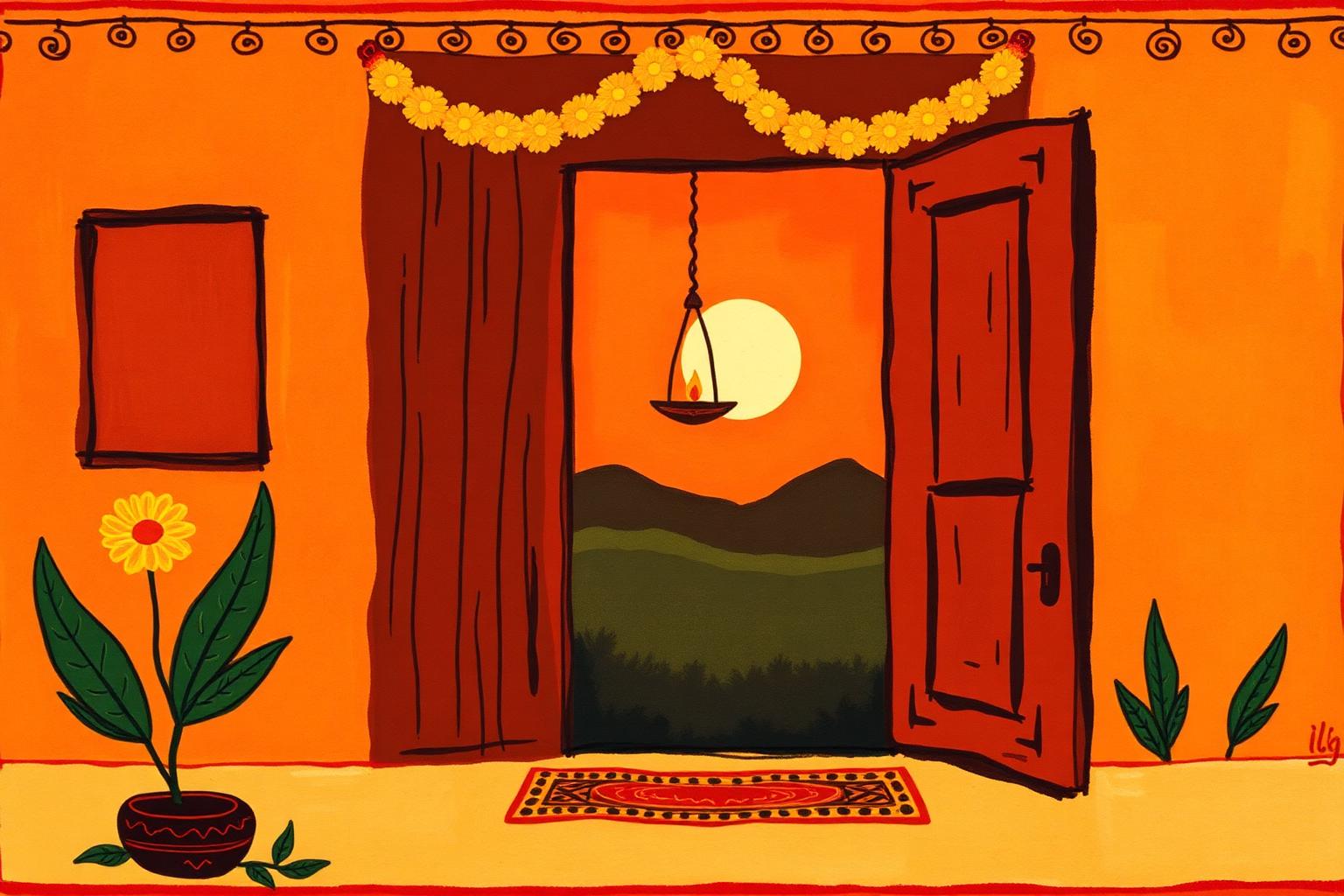
At Panchavati, Sita finds a drooping mango sapling hidden under thorns. She clears its space, waters it and protects it every day.
Moral of the story: Small acts of daily care help little lives grow strong.
In this story
- Characters
- Sita, Rama, Lakshmana
- Source text
- Ramayana
- Value
- Compassion
- Read time
- 4 min read aloud
- Also spelled
- Sita / Janaki / Vaidehi / Maithili / सीता
Day 11 at a glance
- Week
- Week 2 · day 4 of 7
- Trimester
- Trimester 1
- Baby this week
- Ovulation approaches. The egg that may become your baby is maturing. Week 2 baby development
- Today's story
- Sita and the Sapling
- Mantra
- Hanuman Chalisa
- Garbh samvad
- “If you are on your way, you are already welcome.” Talk to your baby this week
Tradition holds that Sita's years in the forest were full of care for plants and animals, and that her kindness made the wild a home. Research on maternal calm suggests that time spent tending plants or being near green spaces can help many expectant mothers feel more relaxed.
"It gives us shelter and fruit and water. How can I not care for it?"
Sita sat on the forest floor near the hut at Panchavati and slowly untangled a creeper from a thorny bush, one loop at a time.
She, Rama and Lakshmana had been living in the Dandaka forest for many years now. They had built a hut of bamboo and leaves near the Godavari River. At first the forest had seemed wild and strange. But Sita had made it a home. She knew which tree the parrots liked, where the deer came to drink, and which flowers opened in the morning and which at night. She talked to the plants as she watered them, the way her mother had talked to the tulsi at home in Mithila.
Rama watched her from the doorway of the hut and smiled. Deer came close to her without fear. Mynas sat on the branches above her head. Lakshmana, sitting nearby with his bow across his knees, felt that the forest was safer and kinder wherever she was.
One morning, Sita noticed a young sapling near the edge of the clearing. It was a small mango tree, no taller than her knee. Its leaves were pale and drooping. A big, thorny shrub had grown over it and was blocking out the sun.
"Poor little one," she said, kneeling down. "You cannot see the sky."
Every day after that, she looked after it. She carefully cut back the branches of the thorny shrub with a small knife, so that the sunlight could reach the sapling. She carried water from the Godavari in a cup made from a folded leaf. She pulled the weeds from around its roots and put a ring of small stones around it so the deer would not step on it.
"You give so much of yourself to this forest," Rama said one evening.
Sita looked up and smiled. "It gives us shelter and fruit and water. How can I not care for it?"
Slowly, the sapling changed. Its leaves turned from pale yellow to green. It stood a little straighter.
Then one afternoon, the sky went dark. Heavy grey clouds rolled in over the hills. The wind began to roar through the trees, and the first big drops of monsoon rain began to fall.
Sita looked out from the hut and thought at once of the little tree. It was still so thin. The wind was bending even the big sal trees.
She pulled her shawl over her head and ran out into the rain.
"Sita, wait!" called Rama.
She reached the sapling. It was whipping back and forth in the wind. She knelt beside it and cupped her hands around its thin trunk, bending her body over it to shield it from the worst of the wind and rain.
In a moment, Rama was there too. Then Lakshmana. Without a word, they knelt beside her. Rama held his wide cloth up like a roof. Lakshmana pushed sticks into the ground on either side of the sapling and tied it gently to them with a strip of bark.
The three of them stayed there together, wet to the skin, until the worst of the wind had passed. Then the rain softened to a drizzle, and the clouds broke, and a thin moon came out over the Godavari.
Sita let go of the little tree. It was standing. Bent a little, wet, but whole.
They walked back to the hut laughing, their clothes dripping, and sat by the fire to dry.
The next morning, the whole forest smelled of wet earth. Birds were singing everywhere. Sita went out to the edge of the clearing, and there, at the very top of the sapling, a new leaf had opened. It was soft and reddish-brown, the colour all new mango leaves are when they first come out.
She touched it with one finger. Then she went to the river, filled her leaf cup with water, and came back to give the little tree its morning drink.
You are growing quietly too, little one, and many hands are ready to shelter you.
More from Ramayana
3 min read · pregnancy & ages 3–8 · also known as “Sita aur aam ke paudhe ki kahani”
Source: Ramayana, Aranya Kanda · Original story inspired by the Hindu tradition
Behind this story
Panchavati on the Godavari, where Rama, Sita and Lakshmana built their leaf hut during exile, is described in the Aranya Kanda of the Ramayana, and the site near Nashik is still visited by pilgrims. This story is a new retelling inspired by that forest life rather than an episode from Valmiki's text. Where most Ramayana tales follow great journeys and trials, this one stays small: Sita notices a pale mango sapling under a thorny shrub, clears its sky, waters it from a leaf cup and rings it with stones. When the monsoon wind comes, all three shelter it together, and a reddish new leaf greets the morning. For a mother-to-be, it mirrors the quiet, daily nurture that helps something tender grow strong.
Nashik's Panchavati remains a living pilgrimage place: visitors see the Kalaram temple, the small Sita Gufa cave and the old banyan trees that give the area its name, since panch-vati means 'five banyans'. The Godavari ghats nearby host the Kumbh Mela every twelve years. In Mithila, Sita's homeland across Bihar and Nepal, women paint her life on walls and paper in Madhubani art, often surrounded by trees, birds and flowers, and Sita Navami in the month of Vaishakha honours her birth. Many families plant a tulsi or mango sapling on a happy occasion, and this story invites the same habit: one small green life to care for while another grows within.
- Theme
- compassion, bonding, courage
- For pregnancy week
- This story is for week 2 of pregnancy
- Updated
Characters
- Sita
- — She makes the forest a home and cares for every plant.
- Rama
- — He holds his cloth like a roof over the sapling.
- Lakshmana
- — He ties the sapling safely to sticks.
The moral
Small acts of daily care help little lives grow strong.
What to say to your baby
My little sapling, I will care for you every day and shelter you through every storm.
Ask them when they're older
How did Sita help the little mango tree grow?
Source: Retold tale inspired by the Ramayana, Aranya Kanda (life at Panchavati)