World · Day 13 · Week 2
The Sparrow's Plea
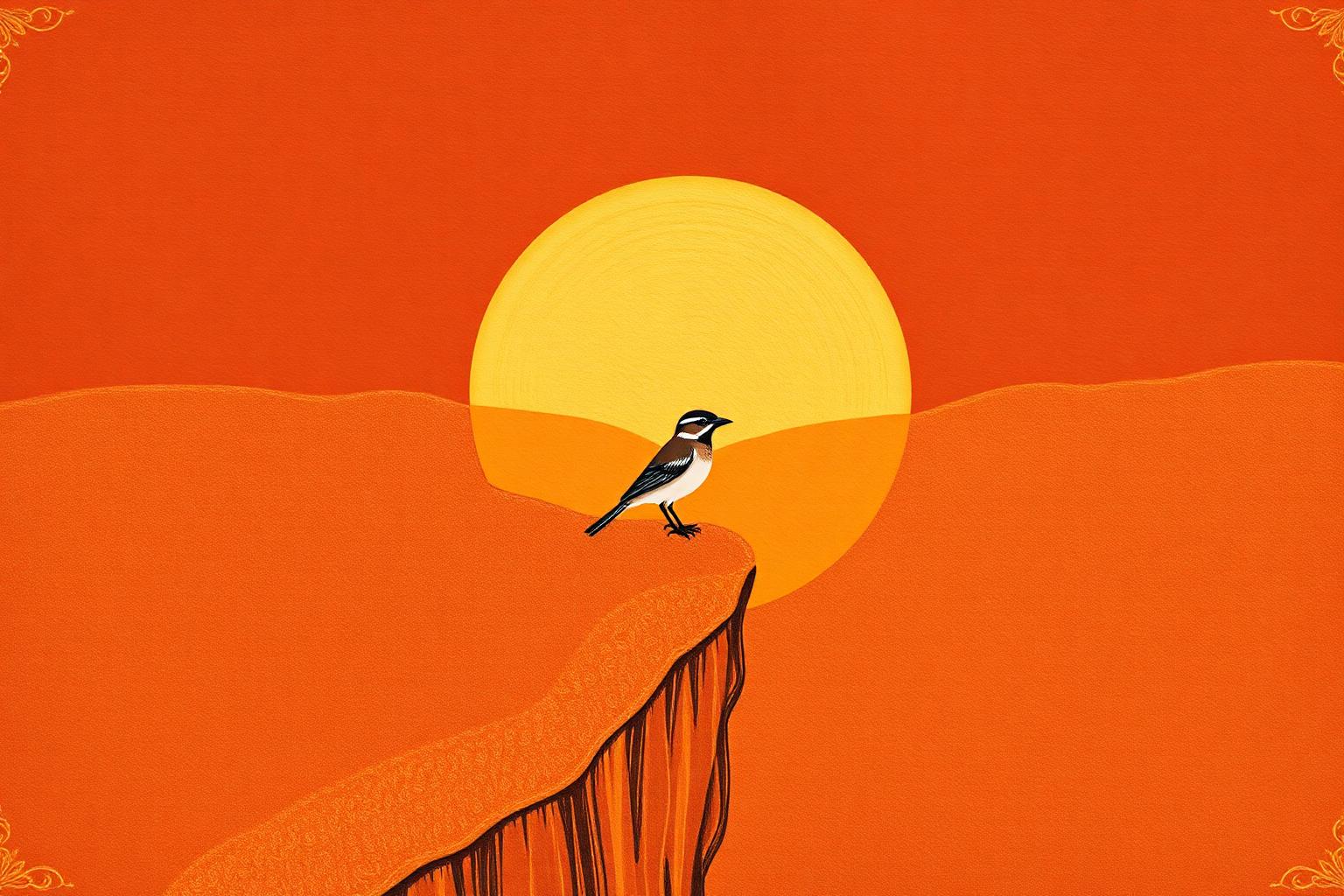
Chirya the sparrow builds her first nest on a banyan branch and sings to her three eggs. On the hottest day of May, the sun and the dry loo wind are too strong for her, and old Kachua the tortoise tells her to ask, not fight.
Moral of the story: It is wise and brave to ask for help.
In this story
- Characters
- Chirya the sparrow, Kachua the tortoise
- Source text
- Folk fable tradition (retelling)
- Value
- Patience
- Read time
- 5 min read aloud
Day 13 at a glance
- Week
- Week 2 · day 6 of 7
- Trimester
- Trimester 1
- Baby this week
- Ovulation approaches. The egg that may become your baby is maturing. Week 2 baby development
- Today's story
- The Sparrow's Plea
- Mantra
- Mahamrityunjaya Mantra
- Garbh samvad
- “If you are on your way, you are already welcome.” Talk to your baby this week
Many Indian traditions hold that asking with humility is a form of prayer, and that a mother's request carries special weight. Research on maternal calm suggests that naming a worry out loud and asking for help, rather than struggling alone, can ease stress during pregnancy.
"The world listens to a mother more often than you think."
Chirya the sparrow tucked one last strand of dry grass into her nest and stepped back to look at it.
It was her first nest. She had built it on an outer branch of the old banyan tree at the edge of the village, near the well where the women came to fill their pots. She had used twigs, grass, a bit of cotton thread from a charpai, and one soft feather. Inside it lay three tiny eggs, pale and speckled, like little river pebbles.
Every time Chirya looked at them, her heart felt full. She sat on them for hours, keeping them warm. She chirped little songs to them about the world outside. About ripe figs on the banyan. About the smell of rain. About the wide blue sky they would fly in one day.
Then came a day in May, the hottest month of the year. The sun rose fierce and white. By midday, the leaves of the banyan hung limp. The village dogs lay flat in the shade. Even the women at the well came early and went home quickly.
Chirya's nest was on the outer branch, where the leaves were thin. The sun shone straight onto it. She could feel the heat coming up through the woven grass.
She spread her wings over her eggs to make a little patch of shade. But she was so small, and the sun was so big. Her feathers felt hot. She panted with her beak open.
Then the wind came. It was the dry, dusty wind of summer, the loo, and it came in hard, rough gusts. It shook the branches of the banyan. Chirya's branch swung up and down, up and down. She held onto the edge of her nest with her tiny claws and pressed her body over the eggs so they would not roll out.
She felt very small. How could a sparrow stand up to the sun and the wind?
Looking down, she saw old Kachua, the tortoise, resting among the thick roots at the bottom of the tree. He had lived there longer than anyone could remember. He had seen a hundred summers.
Chirya flew down and landed beside him, her heart beating fast.
"Kachua," she said. "My eggs are in danger. The sun is too hot, and the wind is shaking my branch. I am not strong enough to fight them. What can I do?"
Kachua slowly opened his old eyes. He looked at the frightened sparrow, and then up at the swaying branches.
"You cannot fight the sun or the wind, little one," he said. "Nobody can. But you can do something else. You can ask. Do not shout. Do not command. Just ask, and tell them who you are protecting. The world listens to a mother more often than you think."
Chirya flew back up to her nest. She settled over her eggs. Then she lifted her head towards the sky.
"Surya, sun," she sang. "Your light makes the mangoes ripen and the wheat turn gold. But your heat is too strong for my little ones today. Please be gentle with my nest."
Then she turned into the wind.
"Vayu, wind," she sang. "You carry the clouds that bring the rain. But today you are shaking my home. Please be soft, for the sake of my babies."
And then something happened. Perhaps it was only the wind changing direction. Perhaps it was more than that. A thick bunch of leaves on the branch above swung over and stayed there, throwing a cool, speckled shade right across her nest. At the same time, the rough gusts eased into a steady breeze that rocked her branch gently, the way a mother rocks a cradle.
Chirya felt the change all through her body. She settled down over her eggs and let out a long breath.
That evening, the heat broke. A few drops of rain fell on the dusty ground, and the whole village smelled of wet earth. The women came back to the well, laughing. The dogs got up and stretched.
In the banyan tree, under her roof of leaves, Chirya sang a new song to her three eggs. It was a song of thanks.
A few days later, three tiny beaks would poke out of three tiny shells. But tonight, there was only the cool breeze, the rocking branch, and a small brown bird keeping three pebbles warm.
The world is kinder than it looks on its hottest days, little one, and we are asking it to be gentle with you.
More from World
4 min read · pregnancy & ages 3–8 · also known as “Gauraiya ki pukar kahani”
Source: Story in the World tradition
Behind this story
Fables of small birds facing great forces are found in many folk traditions, and this gentle retelling places one beneath an old banyan near a village well, during the scorching loo winds of an Indian May. Instead of the bird winning through cleverness or sheer persistence, as in many such tales, Chirya learns from old Kachua the tortoise that no one can fight the sun and wind, but anyone can ask. She sings to Surya and Vayu for her eggs, and leaves swing over to give shade while the wind softens into a cradle-rocking breeze. Its quiet message, that the world listens to a mother, makes it especially fitting for pregnancy, when asking for help is a strength.
- Theme
- protection, patience, bonding
- For pregnancy week
- This story is for week 2 of pregnancy
- Updated
Characters
- Chirya the sparrow
- — A loving new mother guarding her eggs.
- Kachua the tortoise
- — An old, wise friend among the banyan roots.
The moral
It is wise and brave to ask for help.
What to say to your baby
Little one, I will shelter you, and when I need help, many loving hands will be there for us.
Ask them when they're older
Who did Chirya go to for help?
Source: Folk fable tradition (retelling)