Story guide
Stories for the first trimester
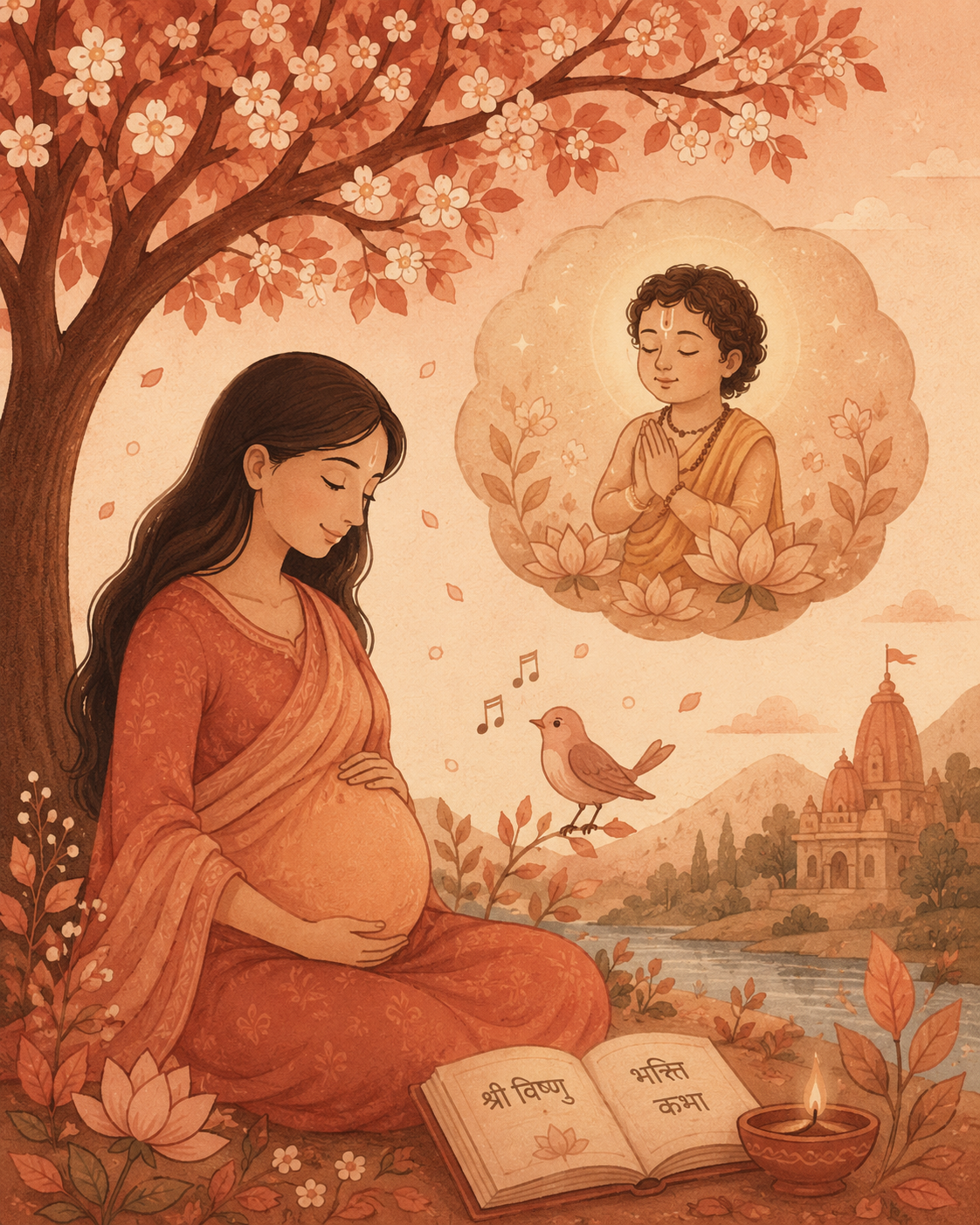
Stories for the first trimester are the first 91 nights of the Garbh Katha journey — gentle tales of Prahlad's courage, Dhruva's determination, the helpful squirrel and Yashoda's love. Every story is free to read in full in English and Hindi, short enough for tired early-pregnancy evenings.
Last updated:
The first trimester is often the hardest to talk about: you may be exhausted and queasy, and not yet ready to tell anyone. These are the stories from days 1–91 of the Garbh Katha journey — short, steady and reassuring, beginning with new beginnings and the idea that your baby is already part of the family.
If reading feels like too much, listen instead, or read just a few paragraphs before sleep. The habit matters more than finishing.
Start here
- Day 1: Prahlad's Quiet Courage
Tradition holds that Prahlad first heard the stories of Vishnu while still in the womb, which is why this tale sits at the heart of Garbh…
- Day 2: Dhruva’s Unshakable Determination
Tradition holds that Dhruva's patience began with his mother's steady words on the night he was hurt.
- Day 3: Little Krishna and Mother Yashoda’s Love
Tradition holds that Krishna, who could not be bound by anything, allowed himself to be held by his mother's love.
Compare at a glance
| Story | Read time | Value | Trimester |
|---|---|---|---|
| Day 1: Prahlad's Quiet Courage | 4 min | Devotion | 1st |
| Day 2: Dhruva’s Unshakable Determination | 5 min | Patience | 1st |
| Day 3: Little Krishna and Mother Yashoda’s Love | 4 min | Friendship | 1st |
| Day 5: The Tiny Squirrel Helping Build Ram Setu | 5 min | Kindness | 1st |
| Day 70: The Sarus Cranes Who Dance Together | 5 min | Trust | 1st |
Stories(91)
- Day 1: Prahlad's Quiet Courage
Tradition holds that Prahlad first heard the stories of Vishnu while still in the womb, which is why this tale sits at the heart of Garbh Sanskar. Research on maternal calm suggests that a settled routine of stories and gentle sound can help a mother feel steadier, and that steadiness is a gift in itself.
- Day 2: Dhruva’s Unshakable Determination
Tradition holds that Dhruva's patience began with his mother's steady words on the night he was hurt. Research on maternal calm suggests that slow breathing and a repeated, gentle phrase can help an expectant mother settle her own mind on difficult days.
- Day 3: Little Krishna and Mother Yashoda’s Love
Tradition holds that Krishna, who could not be bound by anything, allowed himself to be held by his mother's love. Research on maternal calm suggests that warmth and laughter during pregnancy support a mother's own wellbeing, which shapes the home a baby is born into.
- Day 4: Sudama and Krishna’s Eternal Friendship
Tradition holds that a gift given with love is never small, and Krishna's joy over a handful of poha keeps that idea alive. Research on maternal calm suggests that feeling supported by friends and family during pregnancy can ease stress, so this is a good night to think of the people who stand by you.
- Day 5: The Tiny Squirrel Helping Build Ram Setu
Tradition holds that Rama honoured the squirrel's small effort as much as the vanaras' great ones. Research on maternal calm suggests that small daily habits, like a few slow breaths or a short story, can add up to a steadier pregnancy.
- Day 6: Hanuman Discovering His Inner Strength
Tradition holds that Hanuman's great leap began with a few kind words from an elder who believed in him. Research on maternal calm suggests that encouragement from people around a pregnant woman can help her feel more confident and less anxious.
- Day 7: A name not yet spoken
Tradition holds that the naming ceremony comes after birth, and that the months before are for getting to know the baby with patience. Research on maternal calm suggests that talking to the baby and slowing down to notice small things can help a mother feel more connected and less rushed.
- Day 8: The Sweet Bowl
Tradition holds that the birth of Rama and his brothers began with a family's long, patient hope and a shared bowl of payasam. Research on maternal calm suggests that naming and sharing the feelings of waiting, rather than carrying them alone, can ease a mother's worry.
- Day 9: Kunti’s Quiet Strength
Tradition holds that Kunti's steadiness held her sons together through every hardship in the Mahabharata. Research on maternal calm suggests that even when circumstances feel uncertain, small routines of closeness can help a mother feel more grounded.
- Day 10: Mata Tripta’s Loving Care
Sikh tradition holds Mata Tripta in deep respect as the mother who saw her son's gentle nature early and stood by him. Research on maternal calm suggests that meeting a worrying moment with steadiness rather than alarm can help a mother think clearly and feel more in control.
- Day 11: Sita and the Sapling
Tradition holds that Sita's years in the forest were full of care for plants and animals, and that her kindness made the wild a home. Research on maternal calm suggests that time spent tending plants or being near green spaces can help many expectant mothers feel more relaxed.
- Day 12: The Elephant and Her Little Ray of Light
Elephant mothers in India's forests are known for guarding their calves calmly and closely, and many cultures see them as a picture of protective love. Research on maternal calm suggests that pausing and breathing before reacting can help a mother respond to worry with steadiness.
- Day 13: The Sparrow's Plea
Many Indian traditions hold that asking with humility is a form of prayer, and that a mother's request carries special weight. Research on maternal calm suggests that naming a worry out loud and asking for help, rather than struggling alone, can ease stress during pregnancy.
- Day 14: The Baby by the Pampa River
This story celebrates the wonder of a longed-for child arriving as a blessing. It invites you to feel how deeply your baby is already cherished.
- Day 15: Krishna and the Fireflies
Tradition holds that Krishna saw the divine in every small creature, and that his childhood in Gokul was full of such simple wonders. Research on maternal calm suggests that pausing to share a quiet moment of wonder, instead of rushing, can lower a mother's own tension.
- Day 16: Prince Siddhartha and the Swan
Buddhist tradition holds the story of the swan as an early sign of the Buddha's compassion for every living being. Research on maternal calm suggests that quiet, gentle activities and time near water or gardens can help many mothers feel more peaceful.
- Day 17: The Sun Chaser
Tradition holds that Hanuman's great strength and his name both came from this one bold, innocent leap. Research on maternal calm suggests that a mother's sense of humour and lightness, even after a scare, can help her recover her balance more quickly.
- Day 18: Abhimanyu, Listening
Tradition holds that Abhimanyu learned from his father's voice while still in the womb, and this tale is one of the oldest pictures of Garbh Sanskar. Research on maternal calm suggests that rest itself matters during pregnancy, so falling asleep to a loved one's voice is nothing to feel guilty about.
- Day 19: The Girl Who Spoke to the River
Indian tradition has long held the Ganga as a mother who gives without asking, and sitting by flowing water is an old way of finding calm. Research on maternal calm suggests that listening closely to steady natural sounds can help slow breathing and ease a busy mind.
- Day 20: Little Mira and the Flute
Tradition holds that Mirabai's lifelong devotion began with a small statue of Krishna given to her as a child. Research on maternal calm suggests that music and song, especially familiar ones a mother loves, can be a simple way to unwind at the end of the day.
- Day 21: Mahavira and the Angry Snake
Jain tradition holds that ahimsa, gentle non-harm, can soften even the fiercest anger, and Chandkaushik's story is told to children to show it. Research on maternal calm suggests that answering tension with a slow breath and a soft voice can help settle difficult moments at home.
- Day 22: The Gift of the Storm
Tradition holds that the friendship of Krishna and Sudama was built on small kindnesses and easy forgiveness in their ashram days. Research on maternal calm suggests that warm, forgiving relationships around a mother can help her feel safer and less stressed.
- Day 23: Savitri's Sunrise
Tradition holds Savitri as a picture of calm, clear-minded love, and the Vat Savitri vrat is still kept in her memory. Research on maternal calm suggests that facing a worry steadily, one step at a time, can help a mother feel more in control than fighting it all at once.
- Day 24: The Little Bird and the Monsoon Rain
Indian tradition has always watched for small signs of the monsoon, like ants moving their eggs and peacocks calling, and treated the waiting as part of the season. Research on maternal calm suggests that noticing small, present details can ease the restlessness of waiting, including the long wait of pregnancy.
- Day 25: The Stove That Never Went Out
Tamil tradition holds Vallalar's ever-burning stove at Vadalur as a living sign that kindness can be kept up day after day. Research on maternal calm suggests that small, regular acts of giving can lift a mother's mood and sense of meaning.
- Day 26: Yashoda's Quiet Song
Tradition holds that a mother's own peace is the first lullaby a child knows. Research on maternal calm suggests that slow breathing can help a mother settle her own body, and many parents find a calmer adult helps a fussy baby settle too.
- Day 27: The Hands That Wait
Tradition holds that Phalavati's patient love and open-handed giving were what Krishna truly received, more than any fruit. Research on maternal calm suggests that generosity and looking forward to something with hope can both support a mother's sense of wellbeing.
- Day 28: A Full Moon of Weeks
Himalayan Buddhist families hold the full moon as a time for quiet prayer and fresh beginnings. Research on maternal calm suggests that sharing early worries with a trusted elder or partner, instead of keeping them inside, can make the first weeks of pregnancy feel lighter.
- Day 29: The Quail Who Spoke Truth
Buddhist tradition holds that truthfulness and a harmless heart carry their own quiet protection, and this Jataka has been told for centuries to teach it. Research on maternal calm suggests that staying still and breathing through a frightening moment can help a mother think more clearly.
- Day 30: The Rooster Who Called the Sun
Khasi tradition holds that the Sun returned not to the strongest voice but to the kindest, and this tale is still told in the hills of Meghalaya. Research on maternal calm suggests that gentle, patient words, both to ourselves and to others, can soften tense moments at home.
- Day 31: The Hornbill Mother's Hollow
Great hornbills of the Western Ghats really do seal the mother inside the nest while the father brings her food, and many forest communities honour them as faithful partners. Research on maternal calm suggests that steady, everyday support from a partner can help an expectant mother feel safe and cared for.
- Day 32: Young Rama and the Mango Seed
Tradition holds Rama as a model of calm patience, even as a boy. Research on maternal calm suggests that steady, unhurried routines can help a mother feel more at ease during the long months when growth cannot be seen.
- Day 33: The Rabbit in the Moon
Buddhist tradition holds the Sasa Jataka as one of its best-loved lessons in generosity, and the rabbit in the moon is pointed out to children across Asia. Research on maternal calm suggests that simple bedtime rituals, like looking at the moon together, can help a family wind down.
- Day 34: Yudhishthira and the Sacred Pool
Tradition holds the Yaksha Prashna as one of the Mahabharata's great lessons in patience, truth and fairness. Research on maternal calm suggests that pausing to listen before acting, especially when tired or stressed, can help a mother make clearer choices.
- Day 35: The Boy Who Collected Sunrises
Many Indian families greet the sunrise as a daily blessing, and remembering good moments is an old way of carrying light through grey days. Research on maternal calm suggests that recalling happy memories in detail can lift a mother's mood when the days feel heavy.
- Day 36: The Dove and the Ant
Indian fable tradition holds that no kindness is too small and no friend too small to help. Research on maternal calm suggests that doing small kind acts and feeling part of a caring circle can lift a mother's spirits.
- Day 37: Maitreyi's Question
Indian tradition remembers Maitreyi as one of its earliest women thinkers, whose question still opens the Upanishads to new readers. Research on maternal calm suggests that time for quiet reflection, rather than constant busyness, can help a mother feel more settled.
- Day 38: The Garden of Wisdom
Tradition holds Rama's rule, Ram Rajya, as a picture of care for every person, and this tale imagines where he learned it. Research on maternal calm suggests that hands-in-the-soil activities like gardening can be a gentle way for many mothers to relax.
- Day 39: Arjuna and the Eye of the Bird
Tradition holds Arjuna's answer as a lasting lesson in focus, told to Indian children for generations. Research on maternal calm suggests that giving full attention to one simple task at a time can quiet a busy, worried mind.
- Day 40: The Peacock Who Wished to Sing
This Aesop fable gently turns envy into contentment: instead of wishing for another's gift, the peacock learns to see and enjoy his own, and to delight in others' too. It helps a mother welcome her child's unique nature without comparison.
- Day 41: Love Like Salt
Indian folk tradition holds this tale dear in many regions because it honours everyday love over grand words. Research on maternal calm suggests that small, steady daily comforts, like a good simple meal, can matter more to a mother's wellbeing than occasional big treats.
- Day 42: Rama and the Wounded Deer
Tradition holds that Rama, Sita and Lakshmana lived in the forest in harmony with its creatures. Research on maternal calm suggests that a slow, steady voice and patient presence help soothe fear, a skill many parents find themselves using again and again.
- Day 43: The Mice Who Freed the Elephants
The Panchatantra holds that true friends can be found in unlikely places and that kindness and fairness are repaid. Research on maternal calm suggests that a wide circle of support, including people we might overlook, helps mothers feel less alone.
- Day 44: Bhagiratha Brings the Ganga
Tradition holds that the Ganga reached the earth through one king's long patience and Shiva's gentle strength. Research on maternal calm suggests that a slow, steady approach to big tasks, rather than rushing, can help a mother stay steadier through the months of pregnancy.
- Day 45: The Monkeys Who Watered the Garden
Buddhist tradition tells this Jataka with a smile to show that patience and trust are part of wisdom. Research on maternal calm suggests that constant checking and worrying can raise stress, and that learning to trust quiet, unseen growth can bring some ease.
- Day 46: Bhima and the Stormy Night
Tradition holds that the Pandavas were strongest when Bhima's might and Arjuna's and Yudhishthira's wisdom worked together. Research on maternal calm suggests that when something feels overwhelming, stepping back to find shelter and support can work better than pushing harder.
- Day 47: The Lantern Maker's Gift
Indian village life has long held that neighbours, even small ones, carry each other through sad times, and Diwali lights are a sign of hope returning. Research on maternal calm suggests that simple acts of connection can lift heavy moods, both for the giver and the one who receives.
- Day 48: Sita and the Garden of Care
Indian tradition holds the parijat as a sacred tree whose fallen flowers are gathered for worship, never plucked. Research on maternal calm suggests that daily, gentle care routines, for a plant or for oneself, can bring a sense of steadiness during pregnancy.
- Day 49: The Elephant Who Listened
The Jataka tradition holds that the words around us shape our mood, and Garbh Sanskar teaching has long valued a calm and kind home. Research on maternal calm suggests that reducing harsh noise and conflict, and filling the day with gentle voices, can help a mother feel more at peace.
- Day 50: The Strip of Silk
Tradition holds that Draupadi's small, unthinking kindness was remembered and returned when she needed it most. Research on maternal calm suggests that close, caring friendships are an important source of support for expectant mothers.
- Day 51: Hanuman and Rama's Ring
Tradition holds the meeting in the Ashoka garden, told in the Sundara Kanda, as a moment of pure hope, and many families read it for comfort. Research on maternal calm suggests that hopeful messages and a sense of being remembered can ease a mother's loneliness or worry.
- Day 52: The Golden Swan's Gentle Advice
Buddhist tradition holds that contentment and gratitude are a kind of wealth that fear cannot take away. Research on maternal calm suggests that practising gratitude can help ease the worries about the future that often come with pregnancy.
- Day 53: Vidura and the Two Saplings
Tradition holds Vidura as the Mahabharata's voice of calm, fair advice. Research on maternal calm suggests that letting go of the need to predict the future, and focusing on today's care, can ease anxiety during pregnancy.
- Day 54: The Star Collector
Indian families have long sat with neighbours in hard times, and lighting a lamp is an old way of saying you are not alone. Research on maternal calm suggests that feeling connected to community and doing small kind acts can lift a mother's own spirits.
- Day 55: The Olive Ridley Night
The olive ridley arrivals in Odisha are protected by local communities who guard the nests each year, a living tradition of care. Research on maternal calm suggests that gentle, rhythmic sounds like waves can help many mothers relax at the end of the day.
- Day 56: The Fish King Who Called the Rain
Buddhist tradition holds that a life of harmlessness gives a quiet power, and this Jataka was told to comfort people in a year of drought. Research on maternal calm suggests that hopeful rituals and calm words in hard times can help a mother feel less helpless.
- Day 57: Rama and the Lamp in the Temple
Indian homes have lit an evening lamp for generations as a quiet sign of goodness and welcome. Research on maternal calm suggests that a simple evening ritual, like lighting a diya, can help mark the end of the day and settle the mind.
- Day 58: The Boy Who Planted a Rainbow Garden
Indian village life has long held that good things are built together, each person bringing what they have. Research on maternal calm suggests that accepting help from many hands, rather than doing everything alone, can make pregnancy feel lighter.
- Day 59: Arjuna and the Quiet Lake
Indian tradition has long compared a calm mind to still water, and teachers have used this image for centuries. Research on maternal calm suggests that slow breathing and letting thoughts settle, rather than forcing them away, can ease worry during pregnancy.
- Day 60: Avvaiyar and the Boy Under the Tree
Tamil tradition holds Avvaiyar as one of its wisest voices, and this tale shows her humility and humour. Research on maternal calm suggests that laughter and a willingness to learn as you go can ease the pressure many parents feel to know everything.
Starting the journey
The first trimester covers roughly weeks 1 to 13. Many mothers learn they are expecting partway through it, so you can begin on any night — there is no need to catch up. The daily journey opens with Prahlad's Quiet Courage and Dhruva's Unshakable Determination, two classic tales of children whose faith and focus stayed steady.
Stories chosen for this stage
Early pregnancy can bring tiredness and big feelings, so these stories are kept calm and reassuring. Little Krishna and Mother Yashoda's Love celebrates the bond between mother and child. The Tiny Squirrel Helping Build Ram Setu reminds us that small efforts count. The Sarus Cranes Who Dance Together is a gentle nature story about partnership — a lovely one to read with your partner.
A small, steady ritual
In garbh sanskar, what matters most is the habit, not the length. Pick a regular time — after dinner or just before sleep — and read one story aloud. If you feel too tired, ask someone to read to you, or open one of the shorter stories. Missing a night is perfectly fine; simply continue the next day.
Reading in English and Hindi
Every first-trimester story has both English and Hindi text, so the whole family can join in. Many couples read the English version together and ask grandparents to read the Hindi one on weekends. These stories are for comfort and connection; for any questions about your health, please speak to your doctor.
Frequently asked questions
- When should I start Garbh Sanskar stories?
- You can start as soon as you know you are pregnant. The first trimester is about building a calm ritual for yourself; your baby's hearing develops later, but your peace of mind matters from day one.
- What kind of stories suit the first trimester?
- Light, hopeful stories that don't demand much energy — Ganesha and new beginnings, gentle nature stories and short fables. Save long, intense epic episodes for when you feel stronger.
More story guides
- Moral stories for pregnant women
- Stories for the second trimester
- Stories for the third trimester
- Short bedtime stories in Hindi
- Stories for twins
- Stories for siblings — when your child becomes a big brother or sister
- Stories with papa — for fathers to read to the bump
- Stories with grandparents
- Stories for single mothers
- Sikh stories for pregnancy
- Jataka tales for pregnancy
- Panchatantra stories for pregnancy
- Akbar Birbal stories
- Tenali Rama stories
- 3-minute stories for pregnancy
- 5-minute stories for pregnancy
- Stories for month 1 of pregnancy
- Stories for month 2 of pregnancy
- Stories for month 3 of pregnancy
- Stories for month 4 of pregnancy
- Stories for month 5 of pregnancy
- Stories for month 6 of pregnancy
- Stories for month 7 of pregnancy
- Stories for month 8 of pregnancy
- Stories for month 9 of pregnancy
- Bengali folk tales for pregnancy
- Tamil folk tales for pregnancy
- Marathi folk tales for pregnancy
- Gujarati folk tales for pregnancy
- Kashmiri folk tales for pregnancy
- Assamese folk tales for pregnancy
- Kerala folk tales for pregnancy
- Rajasthani folk tales for pregnancy
- Stories of mothers for pregnancy